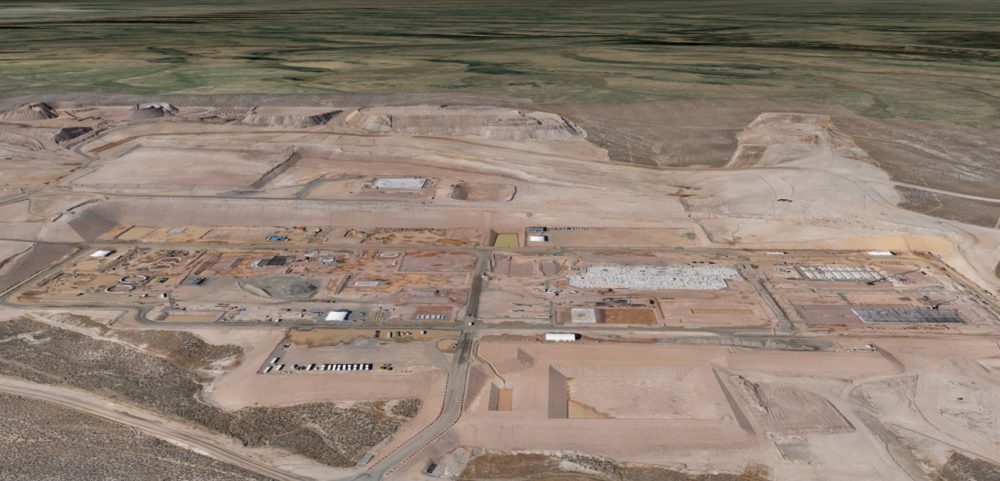
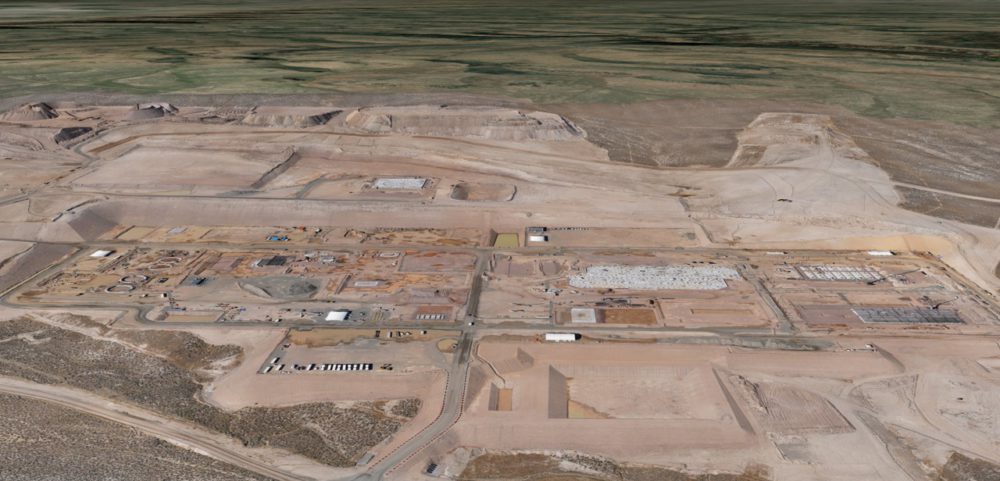
Lithium Americas (TSX, NYSE: LAC) says it is targeting a capital spend of between $1.3 billion and $1.6 billion for Phase 1 of its Thacker Pass project in Nevada this year. A majority of that capex will be used on project construction, with an estimated cost of $1.2-$1.5 billion.
Construction of Phase 1 remains is progressing, with detailed engineering design at 93% completion and procurement at 60% by the end of 2025, the Vancouver-based lithium developer said in a project update issued on Thursday.
This year, the company said it expects to reach peak construction employment, with nearly twice as many workers hired by year-end compared to 2025.
“As planned, we expect to reach peak construction employment of roughly 1,800 skilled craftspeople by year-end,” Lithium Americas president and CEO Jonathan Evans stated.
The remaining portion of capex will be allocated to what the company categorizes as “other capitalized development costs” and interest payments to the Department of Energy, which provided the company with a $2.23 billion loan for the Phase 1 build.
The loan, the largest the Department has given to a miner, was announced in late 2024, allowing Lithium Americas to finance the planned three-year buildout of what would be North America’s next major producer of battery-quality lithium.
Production late 2027
Once complete, the Thacker Pass mine is expected to produce 40,000 tonnes of lithium carbonate annually, which is enough for about 800,000 electric vehicles. The project is positioned as the Western Hemisphere’s largest lithium source, with output far exceeding that of larger peer Albemarle’s (NYSE: ALB) Silver Peak, also in Nevada.
“Lithium market conditions are strengthening just as the project prepares to come online in late 2027, with full ramp-up through 2028,” Evans said in the release.
Amid a growing emphasis on the domestic critical mineral supply chain, the US government last year took 5% stake in Lithium Americas and a separate 5% stake in the Thacker Pass project. In addition to the DOE, the project also had strategic investments from General Motors (NYSE: GM), which owns a 38% stake, and Orion Resource Partners.