Armory Mining Corp. (ARMY:CSE; RMRYF:OTC; J2S:FRA) announced that it is preparing to conduct a series of airborne geophysics surveys at its Ammo antimony-gold project, located in Nova Scotia, Canada.
The surveys have been designed using 50-meter flight lines and will gather data related to associated sulfide mineralization, sericite, and potassic alteration, as well as possible pathfinder uranium anomalies. The program includes magnetic, electromagnetic, and radiometric surveys, each targeting specific geological features linked to mineralization at the site.
“These surveys form an important part of preliminary exploration critical to defining drill targets at Ammo,” said Alex Klenman, CEO of Armory Mining, in the press release. “The data generated by the surveys will aid tremendously in determining the best areas to drill. The geological team has outlined a comprehensive exploration plan for the Ammo project, and we’re committed to completing these next steps,” continued Mr. Klenman.
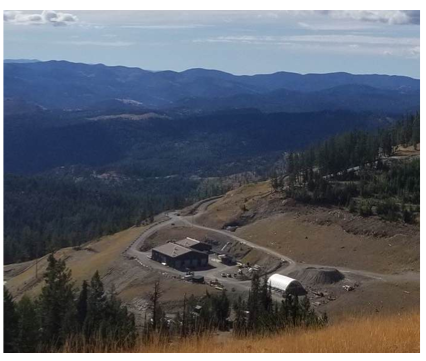
The Ammo project comprises three contiguous mineral claims totaling approximately 3,020 hectares surrounding the historical West Gore antimony-gold mine in central Nova Scotia. The mineralized zones are hosted in sericitic slates and arenites of the Halifax formation, part of the Ordovician Meguma Group. Mineralization occurs in quartz-carbonate veins and sheared host rocks, with documented occurrences of free gold and multiple sulfides, including stibnite, pyrite, pyrrhotite, arsenopyrite, chalcopyrite, galena, and sphalerite.
Critical Minerals and Safe Havens: A Snapshot of the Antimony and Gold Markets
According to a February 5 report from Leede Financial, global gold demand reached an all-time high of 5,002 tonnes in 2025, with a total annual value of US$555 billion. The report stated that global investment demand for gold rose to 2,175 tonnes, driven by investors seeking diversification and safe-haven assets. Gold-backed ETFs recorded inflows of 801 tonnes, while physical gold investment through bars and coins totaled 1,374 tonnes, valued at US$154 billion. Central banks added 863 tonnes of gold during the year. Although jewelry demand declined by 18 percent year-over-year, the total value of gold jewelry rose by 18 percent to US$172 billion.
On February 8, Treasury Secretary Scott Bessent addressed recent volatility in gold markets, attributing sharp price swings to speculative activity originating in China. Speaking during an interview on Fox News, Bessent said, “The gold move thing — things have gotten a little unruly in China,” and noted that authorities there had responded by tightening margin requirements. He characterized the rally as “a classical, speculative blowoff” and emphasized that the Federal Reserve was expected to proceed cautiously with any monetary tightening.
In a February 9 article from Ahead of the Herd, antimony was described as one of the world’s most sought-after metals due to its use in national defense, energy infrastructure, and industrial manufacturing. The report explained that antimony plays a critical role in the production of flame-retardant materials, armor-piercing ammunition, semiconductors, and lead-acid batteries. It also stated that China controlled nearly 80% of the global supply and imposed export restrictions beginning in 2024. Although a total ban on exports to the United States was lifted in November 2025, restrictions on sales to U.S. military users remained in place through November 27, 2026.
The report noted that antimony prices rose sharply in July 2025 to US$59,750 per tonne following China’s export controls. While prices have cooled since that peak, the market remained tight with historically elevated pricing. The article also highlighted that Canada and the United States had both designated antimony as a critical mineral and that exploration efforts had increased in response to ongoing supply constraints.
Geophysical Surveys and Exploration Budget Set for Ammo Project
According to the company’s corporate presentation, the exploration program for the Ammo Property will begin with prospecting and reconnaissance to identify favorable geology. This will be followed by detailed surface sampling and geophysics to assist in determining priority drill targets.
The company stated that three types of airborne surveys will be conducted: a magnetic survey to map structural and lithological features, an electromagnetic survey to detect sulfide mineralization, and a radiometric survey targeting possible uranium anomalies.
Armory Mining has budgeted up to CA$500,000 for the initial phase of exploration. Planning is currently underway, with additional information expected to be provided in the coming weeks.
The Ammo project covers approximately 3,092 hectares surrounding the historical West Gore antimony-gold mine in central Nova Scotia.